
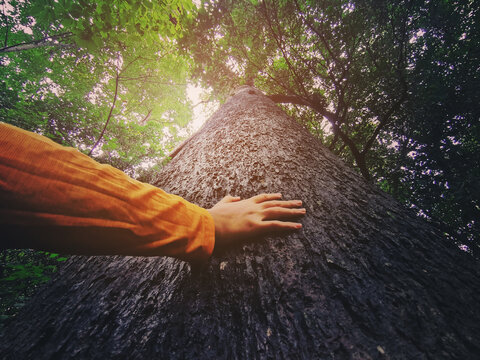
At first glance, hugging a tree might sound whimsical, even a little eccentric. But beneath the bark and leaves, something very real is happening—especially inside the human brain. As it turns out, this simple act taps into deep neurological pathways shaped by millions of years of evolution.
The Brain Remembers Nature
Human brains evolved outdoors, not indoors. Long before screens, schedules, and traffic, our nervous systems developed in constant interaction with forests, soil, wind, and sunlight. When we physically touch a tree—its texture, temperature, and solidity—the brain recognizes a familiar environment.
This recognition activates the parasympathetic nervous system, the part of the brain responsible for rest, repair, and calm. Heart rate slows, breathing deepens, and stress signals begin to quiet.
Stress Hormones Begin to Drop
When we’re anxious or overstimulated, the brain releases stress hormones like cortisol and adrenaline. Studies on nature exposure show that physical contact with natural elements—especially trees—can reduce cortisol levels.
Hugging a tree provides:
- Deep pressure input, which signals safety to the brain
- Sensory grounding, pulling attention away from racing thoughts
- Environmental stability, something the brain associates with protection and shelter
The result is a measurable decrease in mental tension and emotional overload.
Oxytocin: The “Connection” Chemical
Oxytocin is often called the “bonding hormone.” It’s released during hugs, social connection, and feelings of trust. While it’s most commonly associated with human interaction, the brain doesn’t strictly require another person to release it.
Physical contact combined with a sense of calm and presence—like wrapping your arms around a tree—can stimulate oxytocin release. This contributes to feelings of:
- Emotional warmth
- Belonging
- Reduced fear and anxiety
In essence, the brain interprets the experience as a safe, supportive connection.
The Mind Slows Down
Tree hugging naturally encourages mindfulness. The brain shifts from its default mode network (responsible for rumination and self-criticism) into a more present-focused state. Attention moves to sensations: the roughness of bark, the smell of leaves, the sound of wind.
This shift:
- Reduces overthinking
- Improves mood regulation
- Enhances clarity and creativity
It’s not that thoughts disappear—it’s that they lose their grip.
A Sense of Grounding and Perspective
Trees are living symbols of stability. They grow slowly, weather storms, and remain rooted through change. When we physically connect with them, the brain absorbs that metaphor on a sensory level.
This can create:
- A feeling of grounding
- Emotional regulation during overwhelm
- A renewed sense of perspective
Problems often feel smaller after a few quiet moments in contact with something ancient and steady.
Not Woo—Just Wiring
Tree hugging isn’t magic, and it isn’t mystical by necessity. It’s biology meeting environment. The human brain responds to touch, safety, and nature in predictable, measurable ways. When you hug a tree, you’re not doing something strange—you’re doing something deeply human.
In a world that constantly pulls our attention upward and outward, trees invite us to slow down, reconnect, and remember where our nervous systems came from.
Sometimes, the brain just needs a forest to breathe again.